
A resume can look fine to you and still hurt your job search. I have learned that the problem is often not a lack of skills. It is how those skills are presented. A small formatting issue, a vague sentence, or an old version of your resume can make a good application much weaker.
I have also noticed that many job seekers spend too much time trying to make a resume look impressive. The better goal is simpler: make it clear, relevant, easy to scan, and easy for both a recruiter and an applicant tracking system (ATS) to understand.
The Resume Mistakes Job Seekers Make Most Often
Most resume problems are not dramatic. They are small choices that add up and make it harder for an employer to see your value.
Sending the same resume for every job
This is one of the easiest mistakes to make. You create one resume, save it as “My Resume,” and send it everywhere.
The problem is that different jobs often ask for different skills. A customer support role may care about communication and ticketing systems, while a technical support role may focus more on troubleshooting and software tools.
A better approach is to keep a strong master resume and adjust the important parts for each job. Recent hiring guidance continues to recommend tailoring resumes to the specific role because it helps employers see the skills and experience that match the position.
Resume mistakes that can hurt you before a recruiter reads it
There is another part of the job search that many people forget: your resume may be processed by software first.
Many employers use applicant tracking systems to manage and filter applications. These systems can scan for job titles, skills, keywords, and other details from your resume.

Using a design that is too complicated
I understand why highly designed resumes are tempting. A colorful sidebar or a clever two-column layout can look great on your screen.
The problem is that an attractive design is not always easy for an ATS to read.
Current ATS guidance recommends using a clean, simple layout and avoiding elements such as complex tables, graphics, text boxes, and multi-column designs that can interfere with parsing.
A simple resume may look less exciting, but it usually makes the important information much easier to find.
This is a small mistake that is easy to miss.
Your phone number, email address, skills, or other important details should not depend on a document header or footer being read correctly. Some resume parsers may not handle those elements as reliably as normal body text.
Keep essential information in the main body of the document. Do not make the system guess where your information is.
Writing a resume full of job duties
One of the biggest weaknesses I see in resumes is the endless list of responsibilities.
For example:
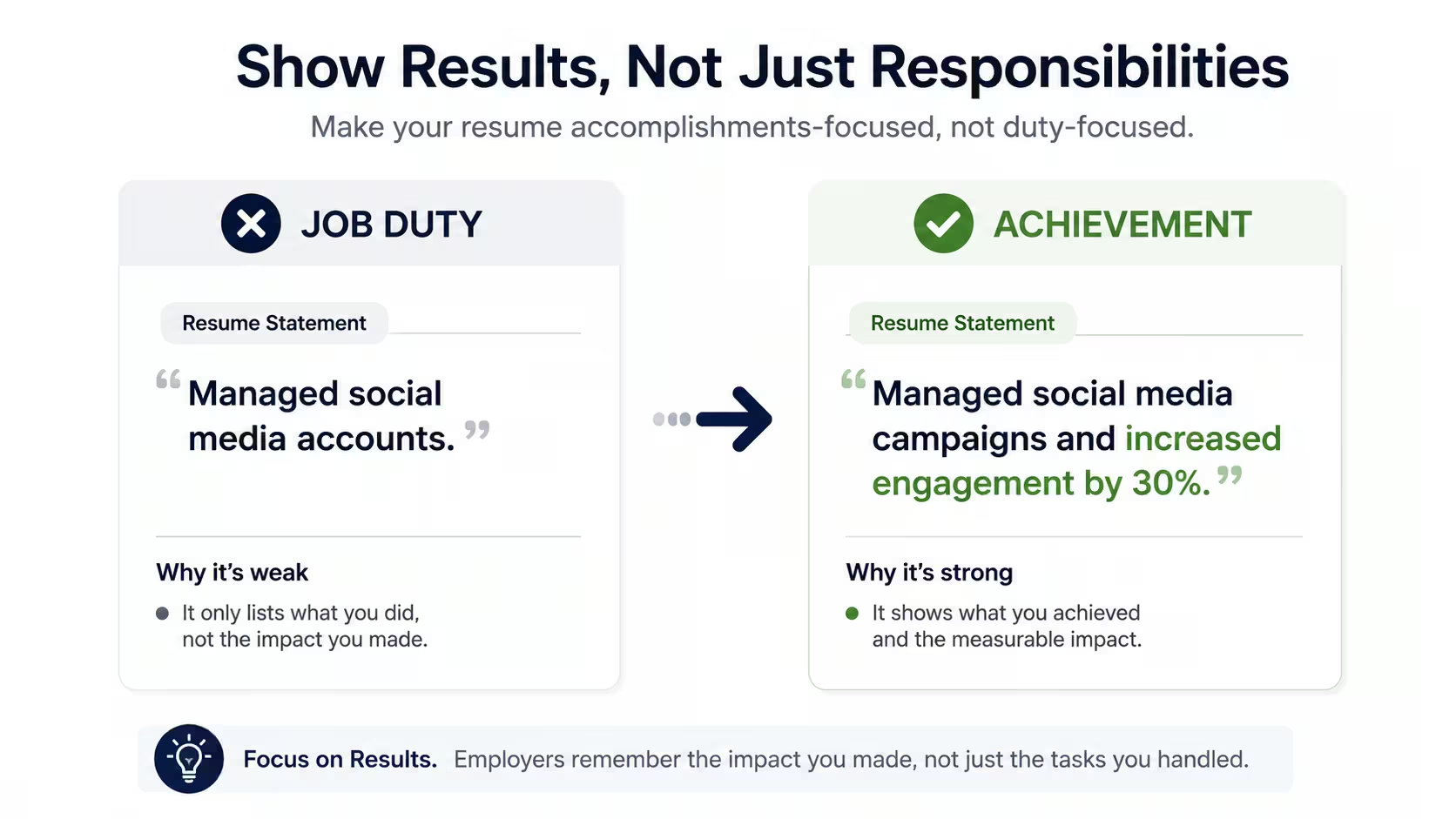
Managed social media accounts.
That tells me what the person did. It does not tell me how well they did it.
A stronger version would explain the result:
Managed social media campaigns and increased engagement by 30% over six months.
The exact number should always be real. Never invent results just to make a resume sound stronger.
The basic idea is simple: focus on achievements where possible, not just tasks. Current resume guidance also recommends using measurable accomplishments because they give employers a clearer picture of your impact.
Not showing the scale of your work
Numbers can make an ordinary statement much more useful.
Compare:
Managed customer accounts.
with:
Managed more than 80 customer accounts and handled daily support requests.
The second version gives the reader a sense of responsibility.
You do not need impressive statistics everywhere. Even simple numbers can help: team size, project count, revenue, traffic growth, response time, customers served, or percentage improvements.
Ignoring keywords from the job description
Another resume mistake is assuming recruiters will connect the dots for you.
If a job description repeatedly mentions “WordPress,” “PHP,” and “WooCommerce,” and you have those skills, your resume should use those same terms naturally.
This matters because ATS tools may scan resumes for relevant keywords and qualifications.
The important word here is naturally.
Do not copy the entire job description into your resume. Do not repeat a keyword ten times. Simply make sure your genuine experience is described using the language employers actually use.
Using vague words instead of useful information
Words like “hardworking,” “motivated,” “team player,” and “results-oriented” are not necessarily bad, but they are weak when they appear without evidence.
Almost anyone can say they are hardworking.
A better resume shows it.
Instead of:
Hardworking project manager with excellent leadership skills.
Try:
Managed five website projects at the same time while coordinating developers, designers, and clients.
The second version gives the reader something concrete to understand.
Making your resume too long
I used to think that adding more information automatically made a resume stronger. It does not.
A long resume can hide the most important information. Recent guidance from Indeed also recommends removing unnecessary content and keeping the document focused on information that improves your chances for the role.
This does not mean every resume must be one page.
A senior professional with many years of relevant experience may reasonably need more space. The real goal is relevance. If a sentence does not help explain why you fit the job, it may not deserve a place on the page.
Small resume mistakes that create a bad impression
Some problems are surprisingly easy to avoid.
Typos and inconsistent dates
A typo in your resume does not automatically end your job search, but it can make the document look rushed. Employers may react differently to errors, so careful proofreading is still worth doing.
Check company names, job titles, dates, email addresses, phone numbers, punctuation, and spacing.
Also keep date formats consistent. For example, do not use “Jan 2022” in one section and “01/22” in another.
Outdated information
Sometimes the problem is not what you added but what you forgot to update.
An old phone number, outdated job title, broken portfolio link, or missing recent experience can create unnecessary problems.
Before applying, I recommend opening the final file and checking every contact detail as though you were the recruiter.
Can AI create resume mistakes too?
Yes. AI can be useful for improving wording, finding gaps, or tailoring a resume. But it can also create polished sentences that are vague, repetitive, or simply not true.
That is where human review matters.
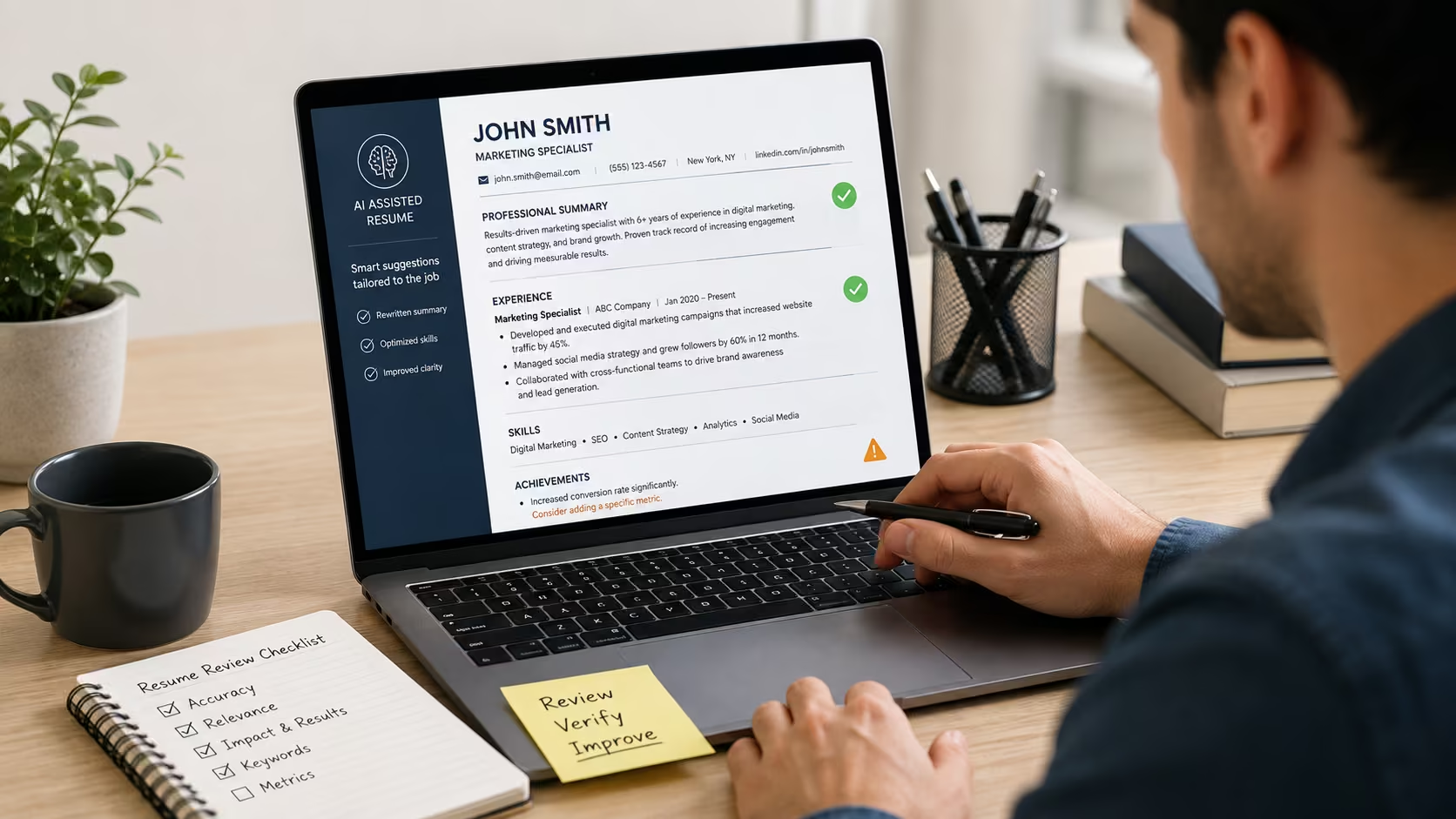
Never leave an AI-generated achievement on your resume unless you can honestly explain it in an interview. A resume should represent your actual experience, not the best-sounding version of it. If you do not have any experience, no problem; you can add your extra activities to your resume. Check how you can find jobs if you have no experience.
I also avoid using AI to make every sentence sound “professional.” Sometimes the simple sentence is better.
What is the biggest resume mistake to avoid?
The biggest mistake is making your resume difficult to understand or irrelevant to the job.
A recruiter should be able to see your role, relevant skills, experience, and achievements without digging through unnecessary text. Your resume also needs to be structured so an ATS can process the important information correctly.
Should I use the same resume for every job?
It is better to tailor your resume for each position.
You do not need to rewrite everything. Usually, adjusting your summary, relevant skills, and most important achievements is enough to make the resume much more relevant to the job.
How do I know if my resume is ATS-friendly?
Start with the basics: use standard section headings, readable fonts, simple formatting, normal date formats, and text instead of graphics or charts.
Then copy the resume text into a plain-text document. If the information becomes confusing or out of order, your formatting may need a second look.
Final Thoughts
The resume mistakes that hurt a job search are often surprisingly ordinary. An over-designed layout, a generic summary, missing keywords, long paragraphs, weak achievements, or one small typo can make your application less effective.
My biggest lesson is that a good resume does not need to impress everyone. It needs to quickly show the right employer that you have the skills and experience they are looking for.
Before you send your next application, read your resume one more time and ask: “Does this clearly show why I fit this job?” If the answer is yes, you are already ahead of many common resume mistakes.

As a Technical Recruiter and Career Guider, I help candidates find the right opportunities and make the hiring process smoother, faster, and more human.
My role centers on sourcing, screening, and matching qualified candidates with open technical positions across multiple companies. I work closely with job seekers to understand their skills, career goals, and preferences, then connect them with roles where they can truly thrive. I believe great recruitment isn’t just about filling positions; it’s about creating access. I help candidates discover more job opportunities, reduce hiring friction, and navigate the recruitment process with clarity and confidence. With strong communication skills and experience working with professionals from diverse backgrounds, I focus on building genuine relationships, whether with candidates or hiring teams.


