

Job interviews can be stressful, even when you have the right skills and experience. I have found that the hardest part is often not the interview itself. It is trying to predict what the interviewer will ask and then worrying about giving the “perfect” answer.
The good news is that most common job interview questions and how to answer them follow familiar patterns. Once you understand what the interviewer is really trying to learn, preparing becomes much easier.
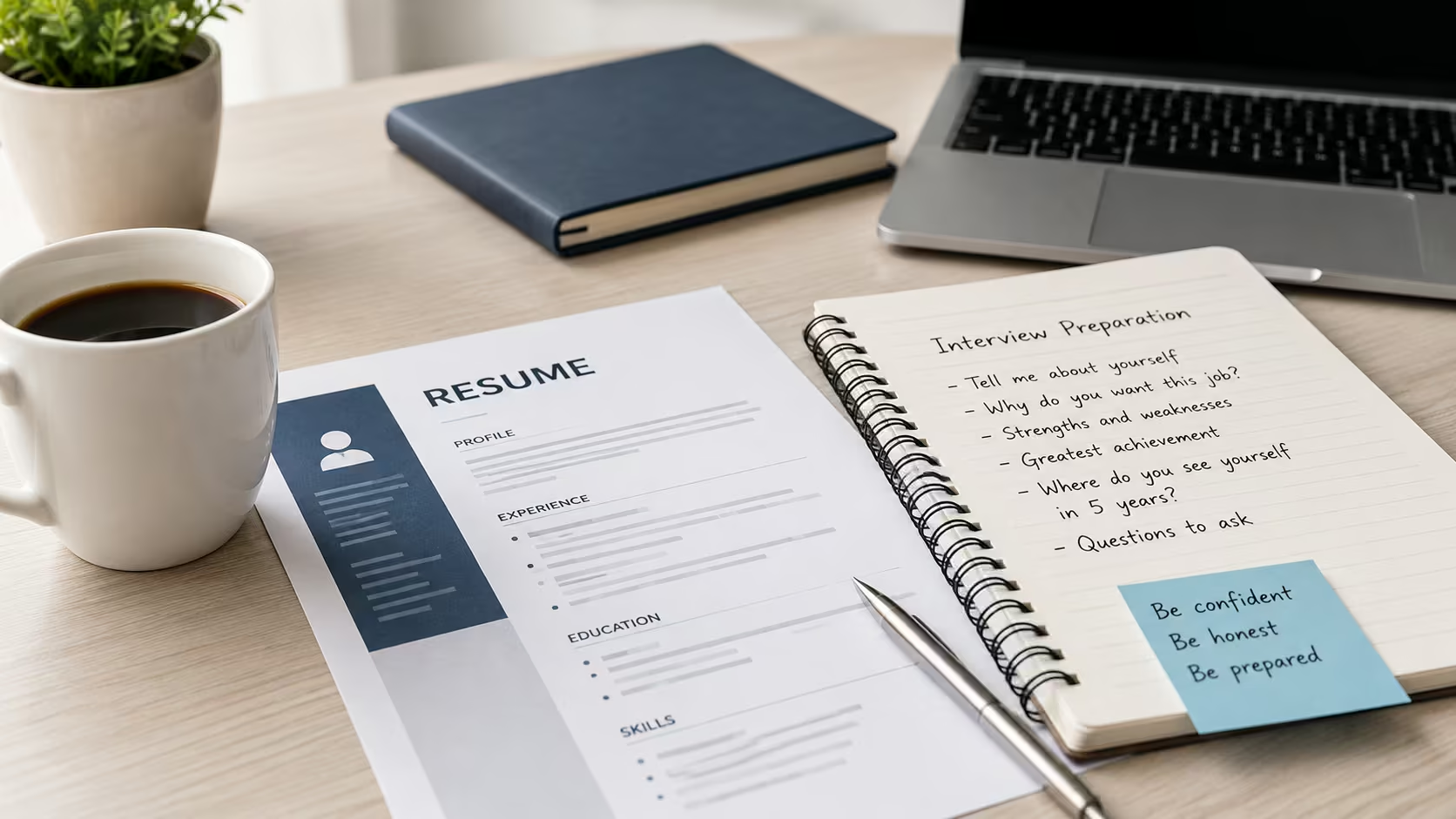
The Real Purpose Behind Common Job Interview Questions
Most interview questions are not random. The interviewer is usually trying to understand three simple things: Can you do the job? Can you work well with others? And do you understand why you want this role?
One mistake I have seen people make is trying to memorize a perfect script. That often makes the answer sound stiff. It is better to prepare your main points and speak naturally.
Tell Me About Yourself Without Repeating Your Resume
This is one of the most common interview questions, and it can set the tone for the rest of the conversation.
The first time I prepared for this type of question, I made the mistake of trying to explain everything I had ever done. That is not what most interviewers need.
A simple approach works better:
Where you are now → What you have done → Why this role makes sense next
For example:
“I have been working in web development for several years, mainly with WordPress and website problem-solving. During that time, I have worked on development, customization, client communication, and technical troubleshooting. I am now looking for a role where I can use that experience while taking on new challenges and working with a strong team.”
Keep it focused. Think of it as your professional story, not your full biography.
Why Do You Want to Work Here?
This question is where a little research can make a big difference.
The interviewer wants to know whether you understand the company and whether you actually care about the opportunity.
Before the interview, I would check the company’s website, products, job description, and recent updates. You do not need to know every detail. You just need enough information to explain why the role caught your attention.
Connect Your Experience to the Company
A natural answer might be:
“This role interested me because it matches the type of work I have experience with. I also spent some time learning about the company and liked the work you are doing in this area. I feel my experience could be useful here, while the role would also help me grow.”
Avoid giving the same answer to every company. Even a small amount of research makes your answer feel more genuine.
What Are Your Greatest Strengths?
The best answer is not a long list of positive words.
Instead of saying, “I am hardworking, passionate, and motivated,” choose one or two strengths that actually matter for the job.
For example, if the role involves solving technical problems, you might say:
“One of my strengths is problem-solving. When I face an issue, I try to understand the cause before jumping to a solution. I break the problem into smaller parts, test possible causes, and keep the right people updated.”
The important part is showing how your strength works in real life.
How to Answer the Weakness Question Honestly
This question can feel like a trap. It does not have to be.
A useful answer shows three things:
- You understand your weakness.
- You take responsibility for it.
- You are working to improve it.
For example:
“Earlier in my career, I sometimes spent too long trying to solve every problem alone. Over time, I learned that asking the right person for input can save time and lead to a better result. Now I still investigate problems myself, but I also know when it is better to ask for help.”
One common mistake is using a fake weakness such as, “I work too hard.” Most interviewers have heard that answer many times.
Why Are You Leaving Your Current Job?
This is one area where staying professional matters.
Even if you had problems with a manager or company, the interview is usually not the place to share every frustration.
Focus on what you want next.
You could say:
“I have learned a lot in my current role, but I am now looking for new challenges and opportunities to use more of my skills. This position stood out because it fits the direction I want to take in my career.”
This keeps the conversation positive without hiding your career goals.
Behavioral Interview Questions: Use Real Examples
Questions such as “Tell me about a difficult situation” or “Tell me about a time you made a mistake” are easier when you have a few real examples ready.
A simple structure is:
Situation → Task → Action → Result
You do not need to say these words during the interview. Just use them to organize your answer.
Tell Me About a Difficult Situation
For example:
“A website I was working on suddenly started having serious performance problems. My responsibility was to find the cause and fix it without creating more issues. I checked recent changes, plugins, caching, and server settings. After finding the conflict, I tested the solution before applying it. The site returned to normal, and I documented the issue for future reference.”
The key is to explain what you actually did.
Tell Me About a Mistake You Made
Nobody expects you to have a perfect career.
A good answer usually includes the mistake, what you did about it, and what you learned.
For example:
“On one project, I assumed I understood a requirement instead of confirming it. That created extra revision work. I corrected the issue and learned to clarify unclear requirements before starting major work.”
Keep the example professional. You do not need to choose the biggest mistake of your life.
How Do You Handle Pressure and Deadlines?
I think one of the most useful things you can show here is that pressure does not automatically make you panic.
Explain your process.
“When I have a tight deadline, I first identify what is most important and break the work into smaller tasks. I focus on the critical work first and communicate early if I see a possible delay.”
This shows planning, communication, and responsibility.
How Do You Handle Conflict at Work?
Most workplaces have disagreements. Saying you have never had one can sound unrealistic.
A better approach is to show that you do not make disagreements personal.
“If I disagree with someone, I try to understand their point of view first. I focus on the issue rather than the person. If we have different ideas, I prefer to look at the facts and find the option that works best for the project.”
The interviewer wants to know that you can work through problems without creating unnecessary drama.
Where Do You See Yourself in Five Years?

You do not need a detailed five-year plan.
What matters is showing that you have direction.
“Over the next few years, I want to continue improving my skills, take on more responsibility, and work on more challenging projects. I would like to grow into a position where I can contribute more to both the technical work and the wider team.”
Keep your answer connected to the role you are applying for.
Why Should We Hire You?
This is your chance to bring everything together.
Think about the job requirements and ask yourself: What problems can I help this company solve?
A strong answer might be:
“I believe I would be a good fit because my experience matches several key parts of this role. I have worked with [relevant skills] and have experience handling [relevant responsibilities]. I also bring problem-solving and communication skills, which I believe are important for working effectively with the team.”
Do not just say you are the best candidate. Give them reasons to believe it.
Questions You Should Ask the Interviewer
At the end of the interview, you will often hear:
“Do you have any questions for us?”
Try not to say no.
A few good questions can help you understand the role better:
- What would success look like in the first six months?
- What are the biggest challenges in this position?
- How does the team usually work together?
- How do you measure success in this role?
- What are the next steps in the hiring process?
These questions also help you decide whether the job is right for you.
The Interview Mistake I Would Avoid Most
If there is one lesson I would keep in mind, it is this: Do not try to sound perfect.
Over-prepared answers can sound unnatural. On the other hand, going into an interview with no preparation can leave you struggling to explain your own experience.
The best balance is to prepare your main points, review the job description, research the company, and think about real examples from your work.
Final Thoughts
Learning common job interview questions and how to answer them is less about memorizing answers and more about understanding yourself and your experience. The more clearly you can explain what you have done, what you learned, and how you solve problems, the easier interviews become.
My practical advice is simple: prepare a few real stories before the interview, but do not memorize them word for word. Know your experience well enough to talk about it naturally. That usually creates a much better conversation than trying to deliver the perfect scripted answer.

As a Technical Recruiter and Career Guider, I help candidates find the right opportunities and make the hiring process smoother, faster, and more human.
My role centers on sourcing, screening, and matching qualified candidates with open technical positions across multiple companies. I work closely with job seekers to understand their skills, career goals, and preferences, then connect them with roles where they can truly thrive. I believe great recruitment isn’t just about filling positions; it’s about creating access. I help candidates discover more job opportunities, reduce hiring friction, and navigate the recruitment process with clarity and confidence. With strong communication skills and experience working with professionals from diverse backgrounds, I focus on building genuine relationships, whether with candidates or hiring teams.


