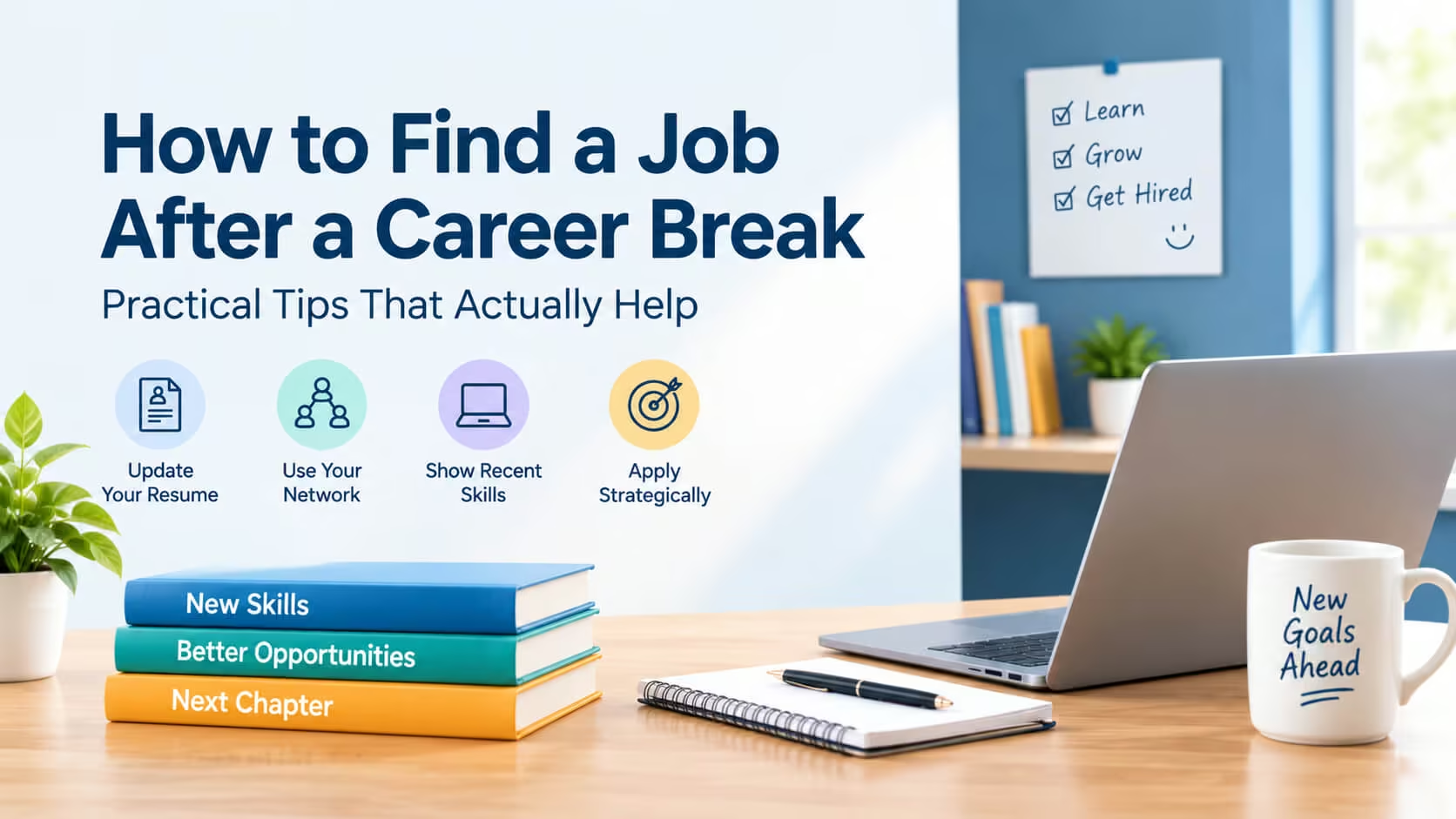
Getting a job after a career break can be frustrating. You may have good experience, useful skills and a strong work history, but recruiters can still ask about the gap before they look at everything else.
The good news is that people do return to work after months or even years away. Their stories show that getting back into employment is not only about sending more applications. In many cases, the people who made progress changed how they searched for jobs, showed recent proof of their skills and used their professional network.
Here are practical lessons from people who successfully returned to work after career breaks.
1. Do not depend only on job applications
One of the clearest examples comes from a job seeker who took a 10-month career break.
He said he applied for more than 200 jobs and received no callbacks during the first two months. He then changed his approach. Instead of relying only on job portals, he identified companies he wanted to work for, looked for people inside those companies and started reaching out for introductions and referrals.
That change helped him get interview opportunities and eventually land a senior role. This does not mean online applications are useless. They are still important. The lesson is that applications should not be your entire job search.
Try combining applications with:
- Former colleagues
- Classmates and professional contacts
- Hiring managers
- Employees at your target companies
- Industry communities
- Referrals
A message to someone in your target industry can open a conversation that a resume submitted through a job portal cannot.
2. Be honest about your career break
Many people worry that they need a perfect explanation for why they stopped working. You do not.
A career break could happen because of family responsibilities, health issues, relocation, education, caregiving, layoffs, personal reasons or many other situations. People who returned to work after a break have often handled this by giving a simple explanation and then moving the conversation toward their current skills.
For example:
“I took a career break for family responsibilities. During that time, I kept up with the industry and recently completed a few projects. I am now ready to return to a full-time role.”
You do not need to spend most of the interview defending your decision. Explain what happened, explain what you are doing now, and focus on what you can contribute.
3. Show that your skills are current
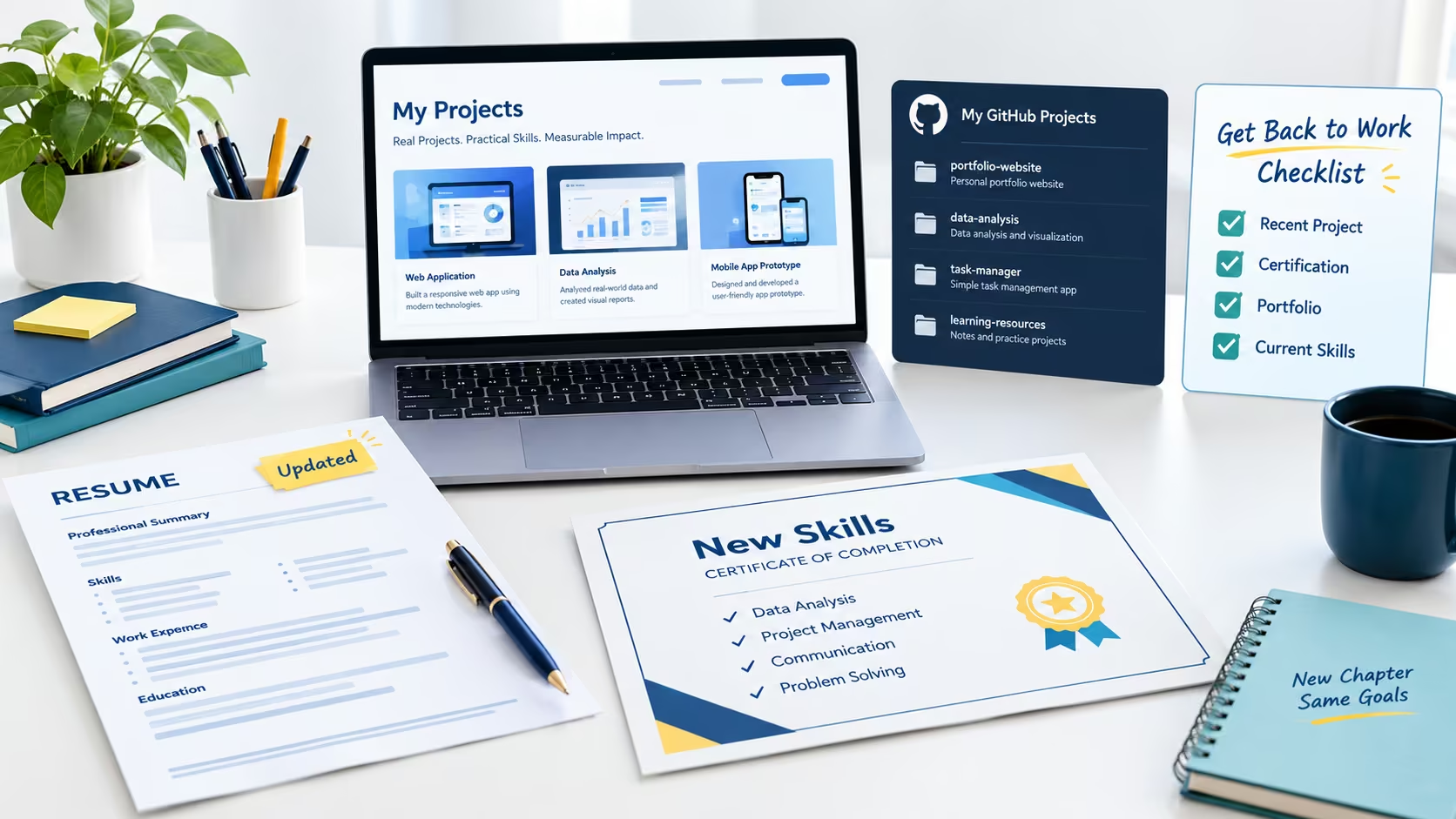
This is one of the most important parts of returning to work. Employers may wonder whether your skills are still relevant. The easiest way to answer that concern is to show them recent work.
A LinkedIn case study described a candidate who had an 18-month career gap and more than 40 rejections. She updated her resume to explain her career break and added recent UX certification and consulting work for two startups. She also had a live project that showed what she could do. The story says she later received a 14 LPA offer.
The exact result will be different for everyone, but the approach is useful.
Instead of saying:
“I still have the skills.”
Show it.
A recent project, portfolio item, certification, freelance assignment, volunteer project or case study can make your resume much stronger.
For example:
Software Developer
Build a small application using current tools and publish it on GitHub.
Digital Marketer
Create a small campaign, SEO case study or content project with measurable results.
Designer
Add recent work to your portfolio instead of showing only projects from five years ago.
QA Engineer
Build test cases, automation scripts or a small testing project using current tools. Recent proof makes it easier for an employer to judge your ability today.
4. Do not hide your career break on your resume
Trying to make the gap disappear can sometimes make your resume harder to understand. Instead, include it clearly and keep the explanation short.
For example:
Career Break | 2023 to 2025
Family responsibilities. Maintained professional skills through online learning and independent projects.
Or:
Career Break | 2024 to 2026
Career pause following relocation. Completed industry training and worked on independent projects while preparing to return to full-time employment.
Use your real reason. Do not create fake employment or fake freelance work just to fill the gap.
Employers can understand career breaks. What creates more problems is misleading information.
5. Update your LinkedIn profile
Your LinkedIn profile should make it clear what you do now. Do not make your entire profile about the fact that you are looking for a job.
Compare these two headlines:
Career Break, Open to Work, Looking for Opportunities
with:
QA Engineer | Manual & Automation Testing | Selenium | API Testing | Returning to Full-Time Work
The second one immediately tells a recruiter what the person does.
LinkedIn also provides a Career Break feature that allows users to add a career break to their profile instead of leaving an unexplained period. Return-to-work experts recommend being open about the break while keeping the focus on your professional identity.
Your profile should answer three questions quickly:
What do you do?
What skills do you have?
What type of job are you looking for?
6. Stop applying to everything
When someone has been out of work for a long time, it is easy to start applying for almost every job. That can make the search harder.
Instead, choose a clear target.
For example:
“I am looking for QA Engineer roles in software companies.”
That is much easier to act on than:
“I am open to anything.”
Once you know your target role, build a list of companies that regularly hire for that position.
Research 20 to 30 companies.
Look at:
- Current job openings
- Employees in your target department
- Hiring managers
- Former colleagues working there
- Skills mentioned repeatedly in their job descriptions
This gives you a focused job search instead of sending the same resume everywhere.
7. Talk to people before asking for a job
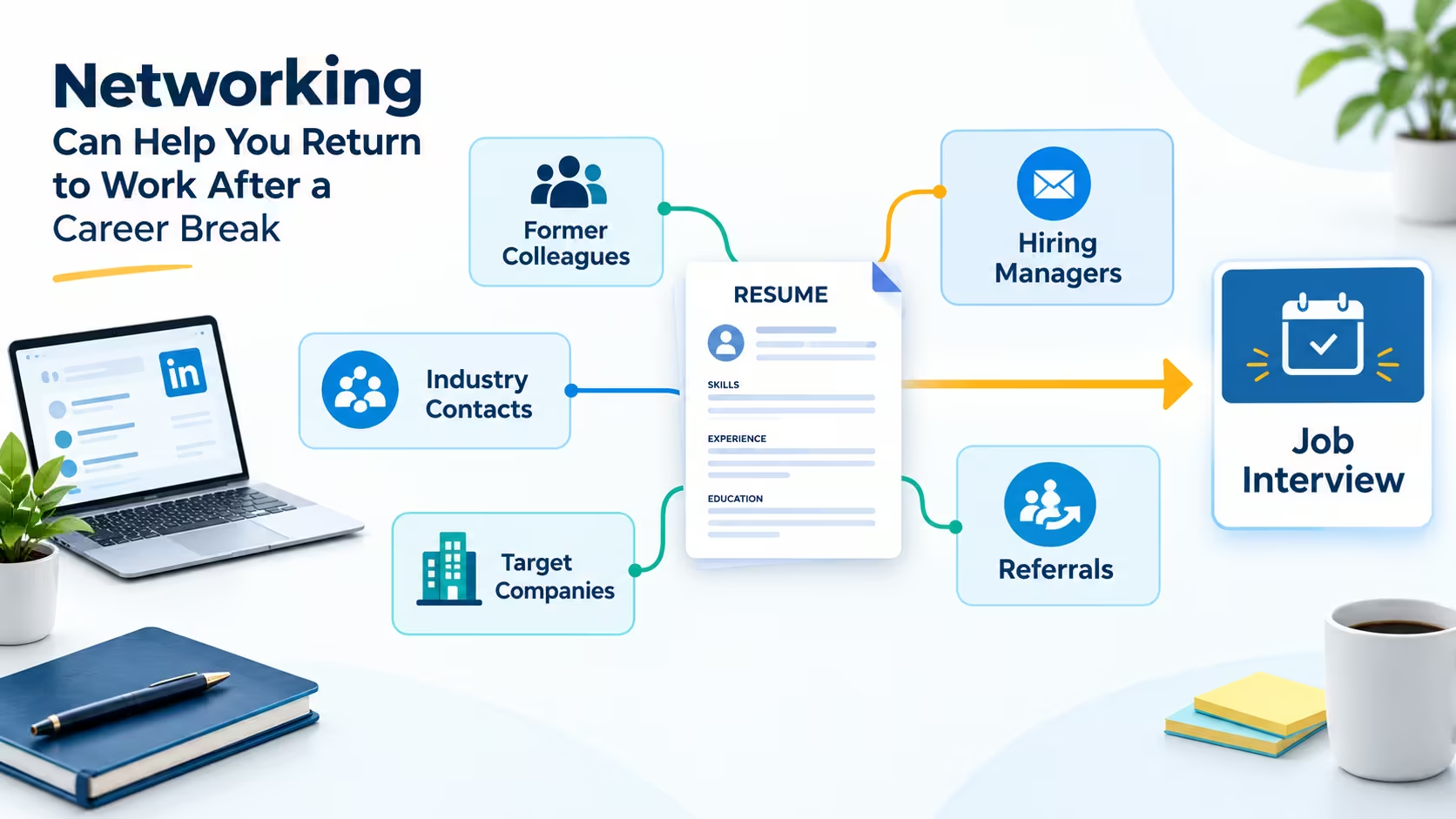
Networking does not have to mean asking strangers for a job in your first message. Start with a genuine conversation.
For example:
“Hi, I noticed you work as a QA Engineer at ABC. I am preparing to return to software testing after a career break and have been learning about current testing practices. I would love to hear what skills your team values most.”
That is easier to answer than:
“Hi, please refer me for a job.”
Once the person knows your background, you can ask about a specific opening.
For example:
“I noticed your company has an opening for a QA Engineer that matches my experience. Would you be comfortable referring me?”
A career comeback story involving a five-year break also described using conversations with people at target companies, creating a target-company list and combining networking with applications.
8. Use old professional relationships
Career breaks do not erase your professional network. Former colleagues may have moved to new companies. Previous managers may know people hiring. Clients, classmates and industry contacts may also know about openings that never reach a public job board.
Make a simple list of people you already know.
Then send a short message explaining:
- You are returning to work.
- Your target role.
- The type of companies you are interested in.
You do not need to message 500 people.
Start with people who already know your work.
9. Consider returnship programs
Some companies have programs specifically designed for professionals returning after an extended career break.
These are often called returnships or return-to-work programs.
iRelaunch maintains a returnship and job board focused on people returning to work and lists programs from employers such as Amazon, Accenture, Goldman Sachs, Microsoft, JPMorgan Chase and Oracle. Its listings also include programs outside the United States, including the BRAC Bridge Program in Bangladesh.
The World Economic Forum also recommends searching for returnship opportunities and making career breaks visible to employers who actively hire returning professionals. If you have been away from work for several years, this type of program can be worth investigating.
10. Prepare your answer for interviews
Do not wait until the interview to think about what you will say about your career break. Prepare a short answer.
A useful structure is:
Why you left → what you did during the break → what changed → why you are ready now
For example:
“I took a break from full-time work to handle family responsibilities. During that period, I kept my skills current through training and independent projects. I have now completed several recent projects in automation testing, and I am ready to return to a full-time QA role.”
Then stop.
You do not need to turn the answer into a long personal story.
The interviewer is usually more interested in whether you can do the job now.
11. Do not wait until you feel 100% ready
A common mistake after a long career break is spending months preparing before applying.
You may think:
“I need one more course.”
Then another course.
Then another certificate.
Meanwhile, months pass.
A better approach is to learn and apply at the same time.
Spend part of your week improving your skills and part of your week applying, networking and talking to employers.
You will also learn from actual interviews. You may discover that a skill you thought was missing is not important, while another skill appears repeatedly in job descriptions.
12. Do not measure your progress only by job offers
A career comeback can take time.
Instead of looking only at the final result, watch for smaller signs that your strategy is improving.
Are you getting more recruiter responses?
Are people accepting your LinkedIn requests?
Are you getting referrals?
Are interviews becoming more frequent?
Are you reaching the final stages?
If you are sending 100 applications and getting nothing, the answer may not be sending 200 more.
Change the strategy.
A simple 30-day plan
A career break can feel overwhelming when the entire job search is treated as one huge task.
Break it into four weeks.
Week 1: Choose your target role, update your resume and rebuild your LinkedIn profile.
Week 2: Complete or publish one recent project that proves your current skills.
Week 3: Create a list of target companies and reconnect with former colleagues and industry contacts.
Week 4: Apply to suitable positions while continuing networking and interview practice.
The goal is not to hide your career break. The goal is to show that your previous experience still matters, your current skills are relevant and you are ready to work again. A career break is one part of your career history. It does not have to become the main story of your career.
Final thought
The people who successfully returned to work did not all follow the same path. Some used referrals, some built recent projects, some used networking, and some joined return-to-work programs.
But one pattern appears repeatedly:
They stopped treating the career gap as something they had to apologize for and started showing employers what they could do now. That is the strongest place to start.

As a Technical Recruiter and Career Guider, I help candidates find the right opportunities and make the hiring process smoother, faster, and more human.
My role centers on sourcing, screening, and matching qualified candidates with open technical positions across multiple companies. I work closely with job seekers to understand their skills, career goals, and preferences, then connect them with roles where they can truly thrive. I believe great recruitment isn’t just about filling positions; it’s about creating access. I help candidates discover more job opportunities, reduce hiring friction, and navigate the recruitment process with clarity and confidence. With strong communication skills and experience working with professionals from diverse backgrounds, I focus on building genuine relationships, whether with candidates or hiring teams.